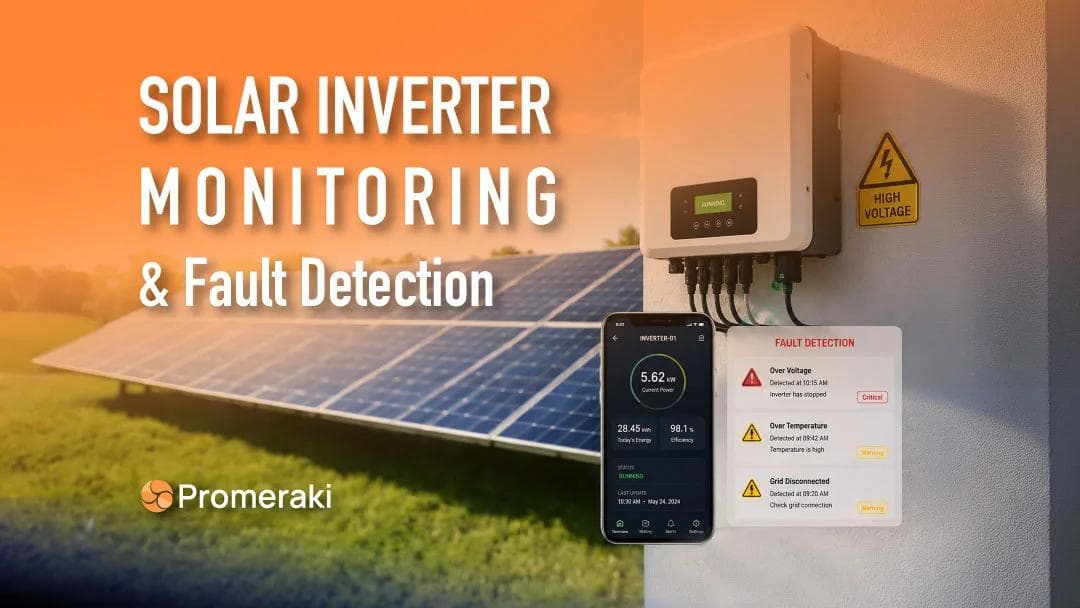
Solar energy adoption is accelerating across industrial facilities, manufacturing plants, and OEM operations worldwide. Lower panel costs, better government incentives, and rising electricity prices have pushed more businesses toward solar as a serious energy strategy.
But most of these installations share a common blind spot.
The solar inverter, the component that converts DC power from panels into usable AC power, is the most failure-prone element in any solar system. And most operators are still relying on manual checks or basic dashboards to keep an eye on it.
That approach is no longer enough.
IoT-powered solar inverter monitoring provides industrial operators with continuous visibility into inverter performance, automated detection of developing faults, and the intelligence to act before problems become costly failures.
This blog covers how it works, what parameters matter most, what faults it catches, and what to look for in a platform built for industrial-scale solar monitoring.
What Is Solar Inverter Monitoring?
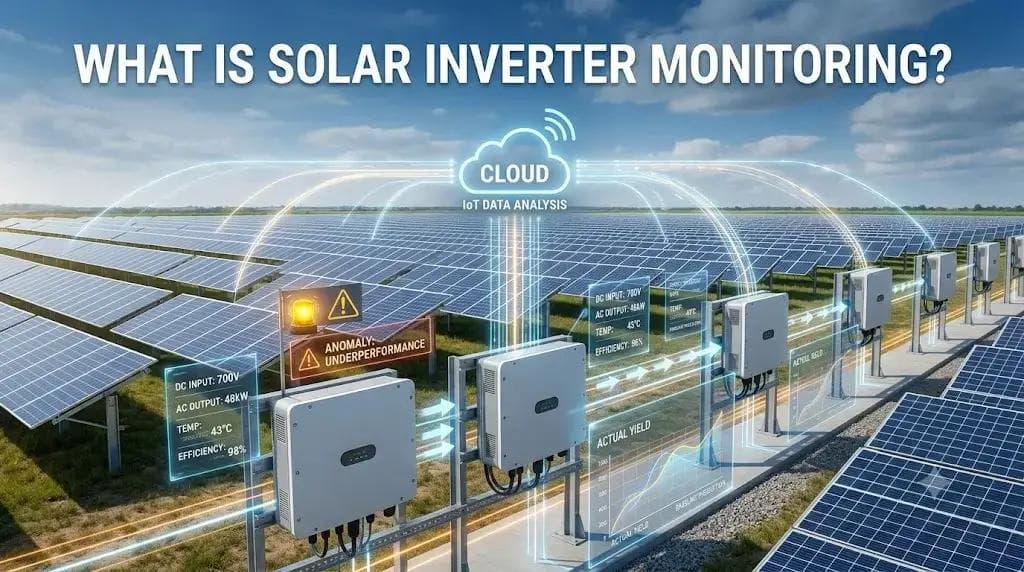
Solar inverter monitoring means continuously tracking the health and performance of your inverters. It involves measuring key electrical and thermal parameters, comparing actual performance against expected benchmarks, and generating alerts when something falls outside the normal range.
At its core, monitoring answers three questions every solar operator needs answered:
- Is my inverter operating at full efficiency?
- Are there any faults developing that could lead to failure?
- Am I generating the energy output this system should produce?
Basic monitoring tools bundled with most inverters give you a snapshot view. You can see the current output on a dashboard or in a mobile app. But these tools are limited. They show you what is happening right now. They do not tell you why something changed, and they rarely connect with the broader operational data your facility generates.
IoT-based solar inverter monitoring goes further. It integrates inverter data with other plant systems, applies automated logic to detect anomalies, and builds a continuous health picture that updates every few seconds, not once a day.
For OEM manufacturers building solar monitoring into their product stack, and for industrial operators managing large solar assets, this level of visibility is what drives real operational outcomes.
Why Traditional Solar Inverter Monitoring Falls Short
Most industrial solar installations are still running on manual or semi-automated monitoring. A technician reviews performance dashboards once daily or visits the site on a fixed inspection schedule.
This approach has three clear limitations.
Faults stay hidden between inspections
If an inverter develops a fault on Monday and the next check is Thursday, three full days of degraded performance go undetected. On a 100kW system, that adds up to a meaningful loss in energy generation and revenue.
Gradual degradation goes unnoticed
Manual checks catch obvious failures. They rarely catch slow-moving trends, a voltage drift that develops over weeks, a temperature rise that creeps up month by month, or an efficiency drop of 2-3% that never triggers an obvious alarm. These subtle patterns are where most long-term energy losses actually live.
Monitoring is reactive, not predictive
Traditional monitoring tells you what broke. IoT monitoring tells you what is about to break. That gap defines the difference between reactive maintenance, fixing things after they fail, and predictive maintenance, fixing things before they do.
For OEMs and industrial solar asset owners, reactive maintenance is expensive. Emergency repairs cost more than planned ones. Unplanned downtime disrupts operations. Equipment life gets shorter when faults go unaddressed for too long.
The industrial world has moved toward condition-based monitoring for motors, compressors, and pumps for exactly this reason. Solar inverters deserve the same level of attention.
How IoT Transforms Solar Inverter Monitoring
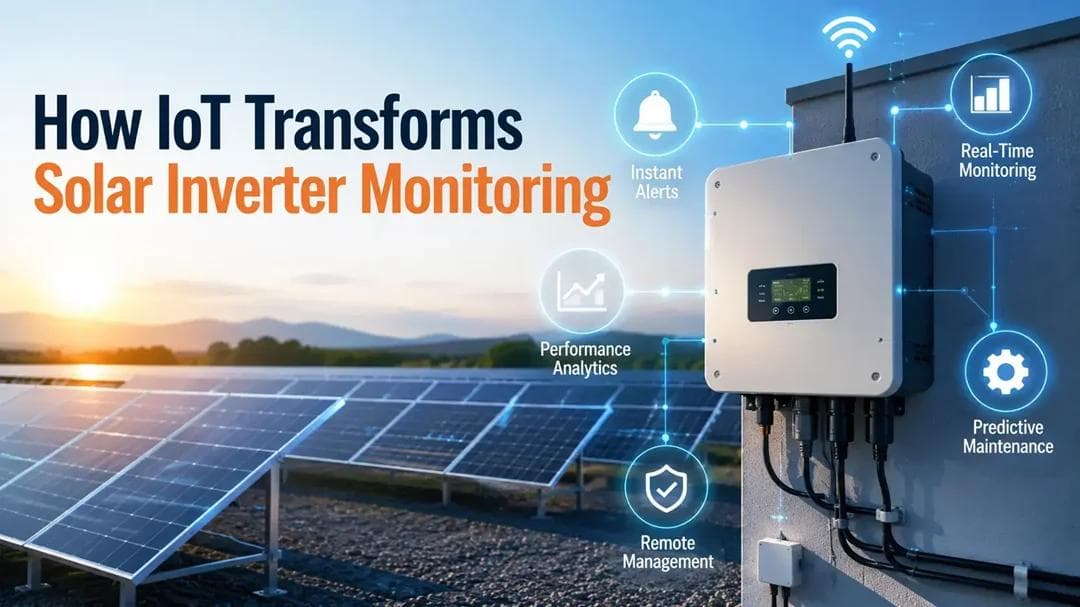
IoT brings three capabilities to solar inverter monitoring that traditional tools cannot match: connectivity, automation, and pattern intelligence.
Connectivity That Works at Scale
IoT sensors connect to solar inverters using industrial communication protocols, such as Modbus RTU, Modbus TCP, SunSpec, and CAN bus, which are the most common. These sensors pull live data from the inverter continuously, pushing updates every few seconds into a cloud or edge platform.
For remote solar installations on rooftops, open fields, or off-grid industrial sites, cellular or LoRaWAN connectivity makes monitoring possible without on-site IT infrastructure. Data flows regardless of where the inverter is located.
Automation That Replaces Manual Watching
Once live data flows continuously, you can automate the detection logic entirely. You define thresholds for each parameter: voltage operating range, maximum temperature, minimum efficiency, and expected yield. When the system breaches any threshold, an alert fires immediately.
No human needs to be watching a dashboard. The system watches itself and notifies the right people the moment something needs attention.
Pattern Intelligence That Catches What Rules Miss
Advanced IoT platforms go beyond simple threshold alerts. They apply rule-based logic and data analysis to detect patterns that individual breaches would never flag.
A single high-temperature reading is not necessarily a fault. But a temperature trend that rises consistently over six weeks is a clear warning that something is wrong. Pattern-based detection catches that. A technician doing weekly spot checks would almost certainly miss it.
This combination of connectivity, automation, and intelligence is what makes IoT the right infrastructure layer for automated solar fault detection at an industrial scale.
Before You Dive In
- Solar inverters fail quietly. IoT monitoring tracks every parameter continuously, catches faults early, and keeps industrial solar systems running at peak performance.
Key Parameters IoT Monitors in Solar Inverters
Not all inverter data is equally useful for fault detection. These are the parameters that carry the most diagnostic value.
DC Input Voltage and Current
This is the power flowing in from your solar panels. Abnormal DC input voltage consistently too high or too low often points to a problem at the panel level, in the string wiring, or in the DC-side connections before the inverter.
AC Output Voltage and Frequency
The inverter outputs AC power within tight voltage and frequency bands set by grid standards. Any deviation from those bands signals a potential inverter malfunction, a grid disturbance, or a fault in the AC-side wiring.
Inverter Conversion Efficiency
A healthy inverter converts incoming DC power to AC output at 95-98% efficiency. A drop of even 2-3% below the normal range, especially when panels are performing well, is often one of the earliest signs of an internal issue. Efficiency monitoring catches this before it becomes visible as a yield shortfall.
Operating Temperature
Inverters generate heat during normal operation and manage it through internal cooling systems. Sustained temperatures beyond the design range indicate either a cooling system failure, blocked ventilation, or an internal electrical issue generating excess heat. Temperature is one of the most reliable early fault indicators available.
Energy Yield vs. Expected Yield
Based on solar irradiance levels and your installed panel capacity, your system should generate a predictable amount of energy each day. Consistent underperformance against that expected yield without an obvious weather cause is one of the strongest composite fault signals. It often appears before any individual parameter breaches its threshold.
Ground Fault and Insulation Resistance
Ground faults in solar systems are a safety risk, not just a performance issue. Continuous insulation resistance monitoring detects ground faults early, before they create electrical hazards or damage other components in the system.
Tracking all these parameters together gives you a complete health picture, not an isolated data point that may or may not mean anything on its own.
Common Solar Inverter Faults IoT-Based Monitoring Detects
Inverters fail in predictable ways. Knowing those patterns is what makes automated fault detection actually useful in the field.
MPPT Failure
Every inverter runs a maximum power point tracking algorithm. Its job is simple to keep adjusting operating conditions, so the panels always deliver peak power. When MPPT drifts or breaks down, the inverter quietly stops doing that. Output drops. No alarm fires. Nothing looks obviously wrong.
IoT monitoring catches it by comparing actual energy yield against what the system should produce under the same sunlight conditions. When that gap widens without a weather reason, MPPT is usually the culprit.
Inverter Overheating
Heat is the fastest way to shorten the inverter's life. Blocked vents, a failed cooling fan, or just consistently high ambient temperatures push internal components beyond what they were built to handle. The damage does not happen overnight; it builds slowly over weeks.
Continuous temperature tracking catches this early. By the time a site technician would notice something wrong on a routine visit, a monitored system has already flagged the trend and scheduled a fix.
DC Arc Faults
A loose connection, corroded wire, or damaged insulation in DC wiring can create an electrical arc. That arc generates concentrated heat, and in a solar installation, that is a fire risk.
Arc faults are dangerous precisely because they are intermittent. They come and go. A manual inspection done on the wrong day finds nothing. IoT systems pick up the electrical signature that arcing produces and flags it before it becomes a serious safety event.
Capacitor Degradation
Capacitors inside inverters wear out over time. That is just physics; no manufacturing defects are required. As they degrade, power quality suffers, output becomes unstable, and eventually the inverter fails.
The useful thing about capacitor degradation is that it leaves a trail. Voltage ripple patterns shift in measurable ways long before failure. IoT platforms track those patterns and give maintenance teams enough lead time to plan a replacement rather than respond to a breakdown.
Grid Disconnection and Anti-Islanding Failures
If the utility grid goes down, the inverter has to disconnect immediately. That is not optional; it is a safety requirement. Grid workers servicing a downed line cannot have power back-feeding from a customer's solar system.
IoT monitoring keeps a continuous check on whether anti-islanding protection is active and responding to the way it should. If something looks off, operators find out right away, not after an incident.
Communication and Sensor Failures
Sometimes the inverter itself is fine. The problem is that a sensor stopped sending data, or a communication module dropped offline. Without monitoring, that data gap goes unnoticed, which means you think the system is running normally when you actually have no visibility at all.
A well-built IoT platform treats silence as an alert. If data stops arriving from any part of the system, that triggers a notification just like any other fault would.
How Automated Solar Fault Detection Works in Practice
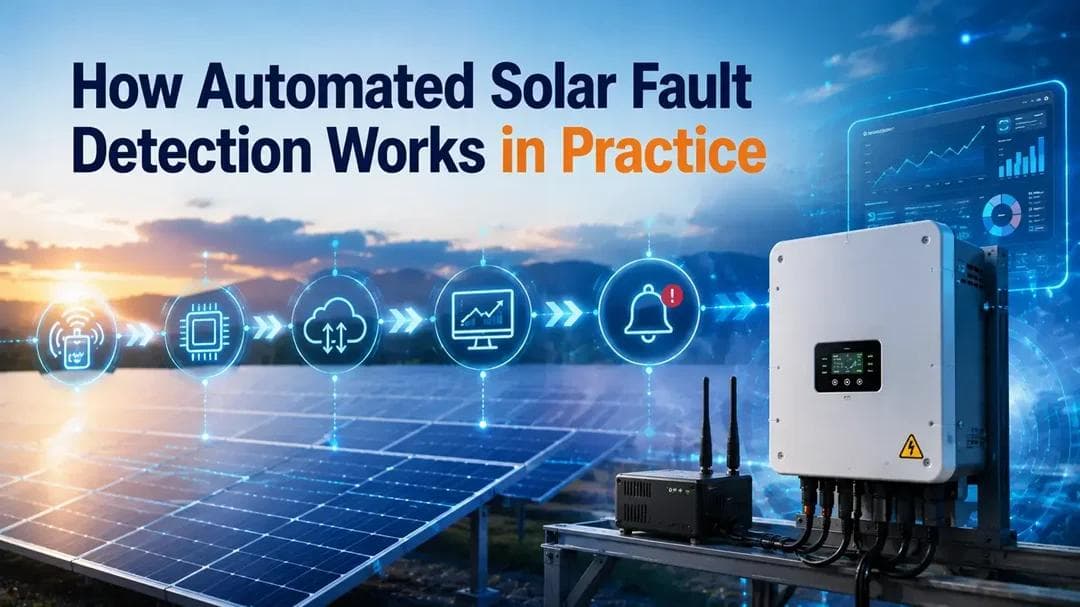
The detection process runs in the background continuously. Here is how it actually works, step by step.
Data Collection
Every few seconds, sensors and inverter communication interfaces pull live readings of voltage, current, temperature, energy yield, and more. This data flows into the IoT platform and builds a detailed picture of how the system is behaving over time.
Edge Processing
In most industrial setups, an edge gateway sits on-site between the inverter and the cloud. It handles the first round of processing locally, cleaning up the data, filtering noise, and running basic fault checks right there at the source.
This matters for two reasons. First, it dramatically reduces the alert response time. Second, if the internet connection drops, monitoring does not stop. The gateway keeps running locally and syncs data to the cloud once connectivity comes back. For remote sites, especially, this is not nice-to-have.
Rule-Based Alerting
The platform runs configurable rules against every incoming data stream. Voltage dips below a set threshold for longer than a defined window; alert fires. When the temperature crosses a critical limit, the system escalates immediately.
These rules are not one-size-fits-all. They adjust based on the inverter model, the climate, and the specific operational requirements of each installation.
Pattern and Trend Analysis
Threshold rules catch obvious faults. Pattern analysis catches the ones that develop slowly.
Yield is declining week over week while irradiance stays consistent. Internal temperature is creeping upward month after month. Neither of these would trigger a simple threshold alert early on. But they are clear warning signs when you look at the trend. The platform identifies those patterns and sends predictive alerts, giving teams a window to act before a fault fully develops.
Alert Routing and Maintenance Response
Once an alert is confirmed, it reaches the right person through the right channel dashboard notification, email, SMS, or a direct ticket in a field service system. Severity level determines who gets notified and how fast.
A low-priority trend alert can go into a maintenance queue for a planned visit next week. A critical fault alert goes out immediately and drives a same-day response.
From the moment a sensor picks up an anomaly to the moment a technician gets notified, the whole loop runs in seconds. Under a manual inspection model, the same problem might sit undetected for days.
Business Benefits of IoT Solar Inverter Monitoring
The numbers behind IoT monitoring make the case better than any feature list.
Lower downtime
Finding a fault early means fixing it before the inverter trips offline. A planned service call costs a fraction of what an emergency repair does, and it does not come with hours of lost generation on top.
Higher energy yield
Inverters that run without monitoring tend to drift below peak performance gradually. Nobody notices a 2% efficiency drop in a single week. But over months, that adds up to real energy and real money left on the table. Continuous monitoring keeps the system performing at what it is actually capable of.
Longer equipment life
Inverters that stay within their operating parameters last longer; it is that simple. Catching thermal stress early, replacing degrading components on schedule, and preventing faults from compounding all add years to equipment life. On large industrial installations where inverters are a significant capital investment, that matters.
Lower O&M costs
Maintenance teams waste time and money when they run on fixed schedules rather than actual system needs. IoT monitoring shifts that model entirely. Teams respond to what the data tells them needs attention, not what the calendar says. For operators managing multiple sites or OEMs servicing solar assets across customer installations, the savings compound fast.
Automated compliance reporting
Grid operators and sustainability auditors want documented performance data. Pulling that together manually is slow and error prone. IoT platforms generate those reports automatically with accurate, timestamped data. Less manual effort, better records, and a cleaner audit trail.
Visibility across every site from one place
Running solar assets across multiple locations means managing a lot of moving parts. A unified IoT platform brings every inverter, every site, and every alert into a single dashboard, so nothing falls through the cracks, regardless of how spread out the portfolio is.
What to Look for in an IoT Solar Inverter Monitoring Platform
Industrial solar monitoring is a specific use case. Not every IoT platform is actually built for it.
Industrial Protocol Support
Your platform needs to speak the same language as your inverters natively. Modbus RTU, Modbus TCP, and SunSpec are the standards you will encounter most. Without built-in support, every inverter integration turns into a custom engineering problem.
Edge Computing Capability
For any serious industrial deployment, edge processing is not optional. It cuts alert latency, reduces dependence on a constant cloud connection, and keeps monitoring running through connectivity interruptions. Remote solar sites need this especially.
Scalability
A platform that works well for five inverters should handle five hundred with the same architecture. For OEMs building monitoring into their product line, scalability determines how many customers the platform can realistically serve without performance falling apart.
Configurable Alerting and Escalation
Generic alerts create noise. Configurable thresholds, trend-based logic, and tiered escalation paths make sure the right alert reaches the right person at the right time without flooding inboxes with false positives.
Integration with Downstream Systems
An alert that sits in a monitoring dashboard but never connects to a maintenance system is only half the value. Look for platforms that integrate cleanly with CMMS tools, ERP systems, field service platforms, and ticketing systems. That is where the loop between detection and resolution actually closes.
Clear Dashboards and Reporting
Not everyone reading system data is an engineer. Dashboards should present performance clearly at a glance, and reports should be exportable without requiring someone to build a custom query every time. If the data is not accessible, it does not get used.
Conclusion
Solar inverters do not fail loudly. Faults develop slowly, efficiency drops quietly, and by the time a routine inspection catches the problem, the loss has been running for a while.
IoT-powered fault detection closes that gap. With continuous data collection, automated alerting, and pattern analysis that catches trends before they become failures, operators stay ahead of problems instead of reacting to them.
For OEM manufacturers building monitoring into their solar products, and for industrial operators managing solar assets at scale, the right IoT platform removes the need to build all that infrastructure from scratch.
Promeraki's IoT platform is built for exactly this connecting the inverter, processing data at the edge, and turning fault signals into actions before they become costly.
Monitoring 5 Inverters or 500: One Platform Handles Both.
Promeraki's IoT platform scales with your solar portfolio without changing your monitoring architecture.