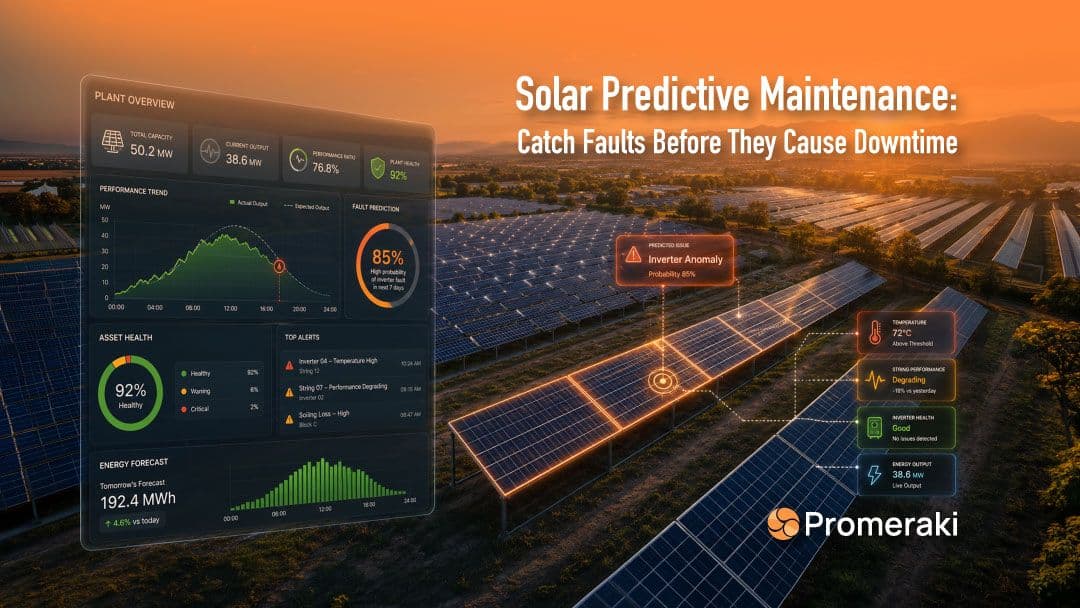
Imagine this. Your solar plant reported normal output all week. The inverter dashboard showed green on every channel. But three weeks later, during a manual check, your O&M team discovered two strings had been underperforming for 19 days. The revenue was gone. Unrecoverable.
This happens at solar plants everywhere. Not because operators are careless. But because traditional monitoring shows you what already happened, not what is about to happen.
Solar predictive maintenance changes that. It uses real-time data, IoT sensors, and AI-driven analytics to catch fault signals early. Minor issues get addressed before they become breakdowns. And breakdowns that cause revenue loss are prevented before they start.
In this guide, you will find how solar predictive maintenance works, what faults it detects, how it protects plant revenue, and what to look for in a platform built to deliver it.
What Is Solar Predictive Maintenance?
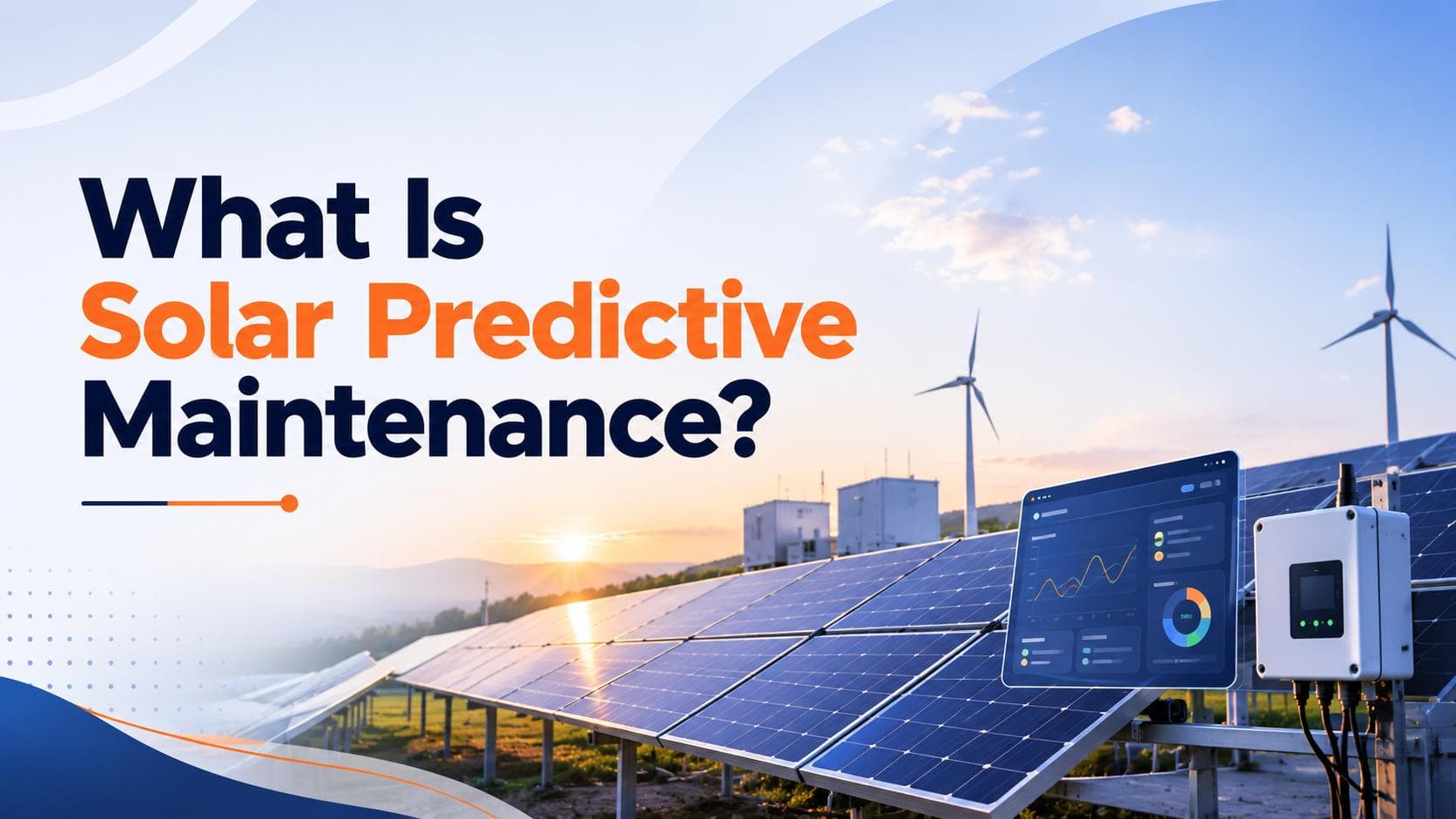
Solar predictive maintenance is a proactive approach to managing solar plant equipment. It does not wait for something to fail. It does not follow a fixed maintenance schedule either. Instead, it uses continuous data from sensors and monitoring systems to detect early warning signs and act before a fault turns into a failure.
The core logic works like this. Sensors collect real-time data from inverters, strings, panels, and trackers. Analytics engines process data to learn what normal operating behavior looks like. When readings start to deviate from expected patterns, the system raises an alert. The maintenance team receives a prioritized notification with fault details before the equipment goes down.
This shifts the entire maintenance model. Operators prevent failures instead of reacting to them. Field teams get actionable alerts the moment something starts to change, not during the next scheduled site visit.
The result is more uptime, lower repair costs, and stronger performance across the full 25-year asset life.
Predictive vs Preventive vs Reactive Maintenance in Solar
Most solar plants today still run on a reactive or preventive maintenance model. Understanding the difference between all three shows clearly why predictive maintenance delivers better outcomes.
| Approach | How It Works | Weakness |
|---|---|---|
| Reactive | Fix the fault after it causes a failure | Revenue is already lost before any action is taken |
| Preventive | Schedule maintenance at fixed intervals regardless of actual equipment condition | Often too early or too late; wastes resources on healthy equipment |
| Predictive | Use real-time data and analytics to detect fault signals early and act before failure | Requires the right IoT infrastructure and monitoring platform |
Reactive solar O&M means the plant loses generation before anyone knows there is a problem. Preventive maintenance improves that. But it still misses faults developing between scheduled visits.
Predictive maintenance closes that gap. It monitors continuously. It detects anomalies early. And it puts the right information in front of the right person at the right time.
How Solar Predictive Maintenance Works
Real-Time Data Collection via IoT Sensors and SCADA
The foundation of any predictive maintenance system is continuous data. IoT sensors are installed across the solar plant. They collect measurements from every key component inverter, strings, combiner boxes, trackers, and meteorological stations.
The data includes voltage, current, temperature, irradiance, vibration, and power output. It is collected at the string and inverter level, in real time.
SCADA systems aggregate all of this and send it to a central monitoring platform. Solar SCADA monitoring gives operators a live view of how every component is performing at any given moment.
Without this data foundation, predictive maintenance cannot work. It is the difference between operating with full visibility and operating without it.
AI and Machine Learning for Anomaly Detection
Raw data alone does not prevent faults. The intelligence layer does.
AI and machine learning algorithms process the incoming data stream. They build a model of what normal behavior looks like for each component. What does inverter output look like on a clear afternoon? How do strings perform after a cleaning cycle? What do temperature readings show during peak generation hours?
Once the system understands normal, it identifies deviation. A subtle string output drop that started three days ago. The inverter temperature runs 4°C higher than expected. A power curve drifting slowly below the expected range.
Solar anomaly detection catches these early signals. They are easy to miss in a standard dashboard summary. AI solar monitoring makes this process continuous and automatic. No operator needs to manually review performance data every single day.
Prioritized Fault Alerts Delivered to Field Teams
Detection is only valuable if it reaches the right person in time.
When the system identifies an anomaly, it generates a fault alert. Each alert is ranked by severity and estimated revenue impact. A string producing 15% below expected output in clear conditions; it gets flagged as a moderate priority. An inverter showing temperature anomalies alongside output drops gets flagged as urgent.
Alerts are delivered to field technicians through a mobile-friendly interface. It shows exactly which component needs attention. It describes the likely fault. It shows how much generation is at risk.
Field teams stop guessing. They act on precise, prioritized information.
What Faults Does Predictive Maintenance Detect in Solar Plants?
Solar predictive maintenance identifies a wide range of faults early across the full plant equipment stack.
Inverter degradation signals
Subtle changes in efficiency, temperature, and output behavior point to an inverter approaching failure. These signals appear days or weeks before the inverter trips. Promeraki's guide on [solar inverter monitoring and automated fault detection] explains how IoT-powered systems track these signals continuously.
String-level output deviations
Individual strings produce below expected output due to panel cracks, soiling, shading, or loose wiring. These deviations do not show up inverter-level summaries. String-level fault detection catches them directly.
Soiling and dust accumulation
A gradual output decline relative to irradiance levels signals soiling buildup. The system triggers a cleaning alert before losses start affecting revenue. In desert and arid regions, this alone can protect 5–10% of annual yield.
Temperature hotspots
Abnormal temperature readings in specific panels or strings point to cell damage, bypass diode failure, or poor electrical contact. Catching these early prevents hotspots from escalating into permanent damage.
Tracker motor wear
Single-axis tracker systems produce performance data that signal motor degradation early. Catching this before a tracker stops moving preserves the 20-35% yield advantage trackers deliver over fixed-tilt installations.
How Early Fault Detection Protects Solar Revenue
In Simple Terms
- Solar predictive maintenance detects equipment fault signals early using IoT and AI, helping plant operators prevent downtime and protect generation revenue.
Every hour of downtime at a solar plant is an unrecoverable generation.
A 1MW plant generating at an average of 0.4MW during daylight hours loses 400kWh for every hour an inverter is down. At a PPA rate of $0.05 per kWh, that is $20 per hour. Across a 72-hour detection-to-repair window common in reactive operations, that is $1,440 lost from a single inverter fault alone.
Solar predictive maintenance compresses that window. Fault signals are detected before the inverter trips. Field teams schedule repair work proactively. Mean time to repair drops. Generation losses shrink. The plant keeps performing closer to its rated capacity.
Industry data shows AI-driven predictive platforms reduce unplanned downtime by up to 47%. Average fault response time drops from 72 hours to under 4 hours.
For operators managing portfolios of 10, 20, or 50 sites, that difference compounds fast. The metrics that drive these outcomes matter just as much as the technology itself. Promeraki's guide on [12 solar PV plant KPIs every operator should track] shows exactly how performance ratio, MTTR, and system availability connect to revenue protection across a solar portfolio.
Benefits of Solar Predictive Maintenance for Plant Operators and Asset Managers
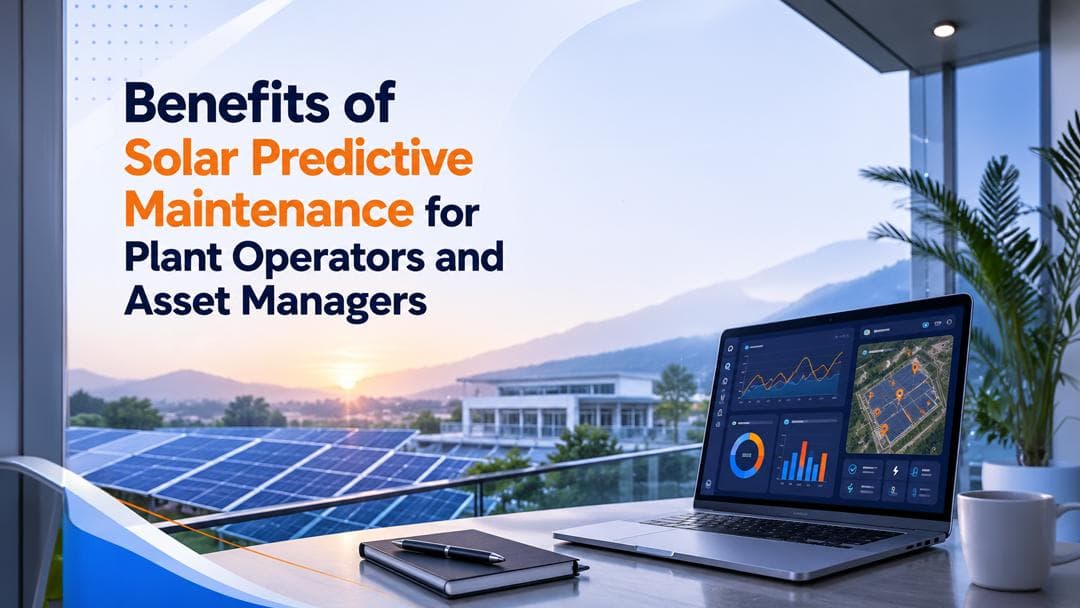
The case for solar predictive maintenance goes well beyond downtime reduction. It delivers measurable improvements across every dimension of plant performance.
- Improved Performance Ratio
Faults caught early mean fewer generation losses. The plant's actual output stays closer to its theoretical maximum. PR stays above contractual guarantee thresholds consistently.
- Extended equipment lifespan
Components maintained proactively last longer. Catching inverter stress early before full failure adds years to equipment life. That reduces capital replacement costs across the 25-year asset cycle.
- Lower O&M costs
Emergency callouts, expedited parts, and unplanned labour cost far more than scheduled proactive repairs. Predictive maintenance shifts the cost profile from unpredictable to controlled.
- Investor-grade performance visibility
Asset managers and lenders need reliable performance data benchmarked against P50 and P90 forecasts. A plant with strong predictive maintenance records shows lower risk and more predictable returns.
- Scalability across multiple sites
Operations teams managing large portfolios benefit most. Fault intelligence across every site consolidates into one prioritized view. Scaling operations no longer means scaling headcounts at the same rate.
This connects directly to how a well-designed solar monitoring system should work. Promeraki's guide on [how solar monitoring systems turn data into decisions] shows how the platform layer connects sensor data, fault detection, and performance reporting from field devices to operator dashboards.
What to Look for in a Solar Predictive Maintenance PlatformThese are the capabilities that matter most.
Multi-brand hardware compatibility
The platform must work with any inverter brand, sensor type, or SCADA system already on site. A solution tied to one manufacturer limits its value immediately. It creates a dependency that benefits the hardware vendor, not the operator.
Real-time alerting with fault prioritization
Alerts need to arrive fast and arrive ranked. A platform that sends fifty unranked alerts creates noise, not clarity. The right system delivers a short, prioritized list. Field teams know exactly where to go first.
Integration with existing monitoring infrastructure
The predictive layer should sit on top of what is already installed. The best platforms add intelligence without replacing existing hardware or rebuilding the monitoring setup from scratch.
Portfolio-level visibility
For operators managing multiple plants, a unified view across all sites is essential. Individual site dashboards that require manual data exports and spreadsheet work to defeat the purpose entirely.
For OEM manufacturers building solar monitoring hardware, the platform layer determines whether their devices keep delivering value to operators after installation. Promeraki works with OEM manufacturers to add this intelligence layer on top of their sensor data. Field hardware connects to real-time fault detection and prioritized alerts without hardware lock-in.
Conclusion
The shift from reactive to predictive is the most impactful operational change a solar plant can make. Faults caught early stay small. Small faults cost less to fix and cause less generation loss. Over a 25-year asset of life, that difference compounds into a significant performance and revenue advantage.
Solar predictive maintenance is not a future capability. The IoT infrastructure, the AI analytics, and the platform layer all exist today.
Promeraki helps OEM manufacturers build this intelligence layer into their monitoring hardware. Field sensor data connects to real-time fault detection, prioritized alerts, and performance visibility across single sites and large portfolios alike. [Get in touch with the Promeraki team] to see how it works in practice