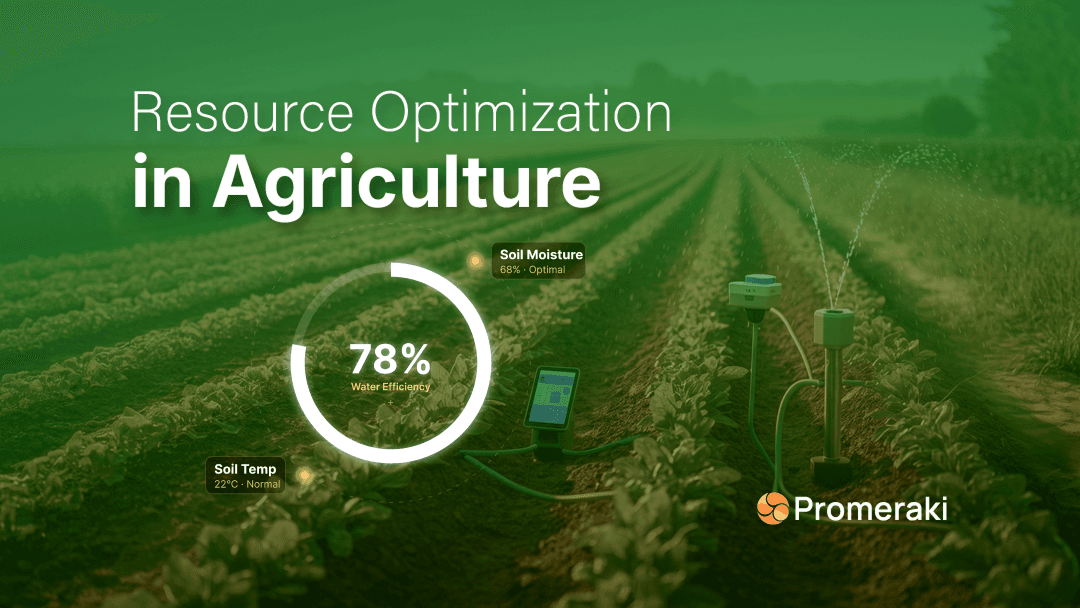
Resource optimization in agriculture means using farm inputs like water, electricity, fertilizer, labor, and equipment in the most efficient way, so nothing is wasted and productivity increases. It helps farmers reduce costs, improve yields, and run farms more sustainably even under changing climate and market pressures.
In 2026, resource optimization is essential for farmers, agritech companies, and equipment manufacturers to stay competitive and resilient.
Modern resource optimization in agriculture goes beyond basic irrigation or manual scheduling. It combines real-time data, automation, and connected farm systems to track water usage, control electricity consumption, manage fertilizerapplications, and reduce unnecessary labor. This approach helps farms operate with better accuracy, predictable input usage, and stable crop performance across different seasons and field conditions.
In this article, we explore what resource optimization really means in practical farming, which resources benefit the most from optimization, what technologies support it, and how farmers and manufacturers are applying it in real-world agriculture.
What Is Resource Optimization in Agriculture?
Resource optimization in agriculture means managing all farm resources, water, electricity, fertilizer, labor, and machinery efficiently to get the best output with the least waste.
It answers questions like:
- Are we using the right amount of water?
- Is electricity consumption controlled?
- Are fertilizers applied accurately?
- Is labor used effectively?
- Are machines running at optimal conditions?
The goal remains to reduce waste, increase productivity, and protect soil and water resources.
Why Resource Optimization Matters in 2026
Resource optimization matters more now because traditional farming challenges are intensifying.
Key pressures today
Water scarcity is increasing.
Agriculture accounts for a large share of water use globally. Efficient water use is critical to sustain farming.
Electricity costs are rising.
Pumps and motors running longer add to bills and reduce profitability.
Fertilizer pricesremain volatile.
Improper use wastes money and harms soil.
The weather has become unpredictable.
Unplanned heat, drought, or rain affects irrigation needs.
Labor shortages persist.
Farmers spend hours manually operating pumps and checking fields.
Because of these trends, farms need systems that optimize resources automatically and reliably.
Automate the work. Keep the profit.
Promeraki builds smart resource management directly into agricultural devices, so your customers spend less and grow more.
Which Farm Resources Need Optimization?
Most farms use similar resources that need precise management.
| Water | Directly impacts crop growth and soil health |
|---|---|
| Electricity | Powers pumps and equipment |
| Fertilizer | Influences soil nutrients and crop quality |
| Labor time | Affects daily operations and costs |
| Equipment | Needs monitoring to reduce wear and downtime |
| Fuel | Powers machinery and transport |
| Soil nutrients | Must be balanced for long-term fertility |
Optimizing these reduces waste and increases productivity.
How Does Water Optimization Improve Farm Output?
Water optimization focuses on giving crops just the amount they need, when they need it.
Key water facts
- Agriculture uses the majority of water resources in many countries, making efficient irrigation a priority.
- Smart irrigation systems can reduce overall water consumption by up to 70% on some farms when compared with traditional irrigation methods, thanks to real-time monitoring and automated control.
- One technology field test showed water savings between 28% and 71% with AI-enabled solar irrigation systems.
- Smart irrigation can improve water use efficiency by up to 35% on some farms.
- Better water management helps preserve soil health and keeps crops healthier throughout the season.
How Does Electricity Optimization Cut Costs?
Electricity optimization reduces unnecessary pumps and motor use.
Many farms run pumps longer than needed because irrigation is manually controlled. Automating pump schedules based on soil moisture and tank levels cuts energy usage and lowers monthly bills.
Smart controllers can:
- Turn pumps on/off based on real needs
- Prevent idle running
- Schedule irrigation during off-peak hours
Reducing electricity waste helps farms lower operating costs without reducing output.
How Does Fertilizer Optimization Improve Soil and Costs?
Fertilizer optimization matches nutrient delivery to crop needs.
Too much fertilizer:
- Burns crops
- Leaches nutrients into soil
- Increases farm costs
Too little fertilizer:
- Limits crop growth
- Reduces yields
Precision fertilizer systems use soil and crop data to ensure just the right amount is applied, protecting soil long-term and reducing costs.
How Does Labor Optimization Simplify Farming?
Labor optimization reduces manual fieldwork.
Farmers often spend hours:
- Walking fields
- Starting and stopping equipment
- Checking moisture and pump status
Automation changes this by letting farmers:
- Monitor conditions from a phone
- Receive alerts
- Control systems remotely
This saves time and effort, especially on larger farms.
What Technologies Support Resource Optimization?
Modern systems make optimization easier.
Smart Irrigation Systems
These systems water fields based on real needs, not fixed schedules.
Soil Moisture Sensors
Placed at various soil depths, they show real-time soil conditions.
Flow and Pressure Sensors
They detect leaks, blocked lines, or abnormal irrigation patterns.
Automation Controllers
They switch pumps and valves automatically based on preset logic.
Mobile Apps and Dashboards
Farmers can check field conditions and control systems remotely.
Weather-Based Irrigation
Systems adjust watering based on forecasts and current conditions.
AI and Data Insights
AI analyzes trends and suggests optimal irrigation, fertilizer, and energy use.
Together, these technologies help streamline decision-making and reduce manual effort.
What Are the Key Benefits of Resource Optimization?
Resource optimization delivers measurable advantages.
Water Savings
Farms using smart irrigation systems can reduce water use significantly, often between 30% and 70%, depending on technologies and field conditions.
Lower Electricity Bills
Automatic controls shorten pump runtime, cutting power usage, and lowering costs.
Higher Crop Yields
Crops receive the right water and nutrients at the right time, leading to more consistent growth.
Soil Health
Precise irrigation reduces waterlogging and nutrient leaching.
Less Manual Work
Farmers spend less time on repetitive tasks and more on planning and strategy.
Longer Equipment Life
Pumps and motors last longer when not overused.
Better Planning
Real-time data lets farmers make faster and more accurate decisions.
Key Benefits:
- Seven outcomes: Less water, lower bills, better yields, healthier soil, less labour, longer equipment life, faster decisions. All achievable with the right system.
Why OEMs and Manufacturers Must Support Resource Optimization
Equipment manufacturers play a key role because farmers need reliable hardware.
OEMs produce:
- Smart pump controllers
- IoT-enabled irrigation valves
- Soil moisture sensors
- Motor protection systems
- Mobile apps and dashboards
- Energy-efficient pumps
- Flow and pressure monitoring tools
By integrating sensors and automation into hardware, OEMs help farmers get real data and real efficiency gains.
What Are Global Market Trends in Smart Farming?
The global smart farming market is growing steadily.
- The smart farming industry grew by about 7.8% yearly and is expanding as agritech adoption increases.
- The global smart agriculture market is projected to reach nearly USD 74 billion by 2034, reflecting long-term growth in precision and connected farming technologies.
These figures show strong demand for technologies that optimize resources and improve sustainability.
How to Choose the Right Resource Optimization System
When evaluating systems, consider:
- Sensor accuracy
- Automation flexibility
- Mobile and remote access
- Data visualization
- Easy installation
- Local support
- Integration with existing equipment
A good system should reduce effort, not add complexity.
Final Thoughts
Resource optimization in agriculture is no longer optional in 2026. It is a practical approach to improve efficiency, reduce waste, and strengthen farm performance under changing conditions.
By using smart irrigation system farms can become more productive and resilient.
Both farmers and manufacturers benefit when resources are used wisely. The farms that adopt these practices today will be better positioned for future climate and market challenges.