Introduction
More growers are moving away from synthetic inputs, more consumers are asking how their wine was made, and more research is showing that the health of your soil directly shapes the quality of what ends up in the bottle.
But biodynamic viticulture also comes with its share of debate. Cow horns. Lunar calendars. Cosmic preparations. It sounds unusual and honest; some of it still divides scientists.
So what is actually true? What does biodynamic farming deliver in a real vineyard, and what is just noise?
That is exactly what this blog answers. We look at the myths, the measurable outcomes, and the real data behind biodynamic grape growing so you can decide whether it makes sense for your vineyard without the hype in either direction.
What Is Biodynamic Farming in Viticulture?
Think of biodynamic farming as organic viticulture with a much bigger ambition.
Organic farming removes the harmful stuff, no synthetic pesticides, no chemical fertilizers. That is a solid foundation. Biodynamic farming keeps all of that and asks a deeper question: what does a truly healthy vineyard look like, and how do we build one that gets stronger every single season?
The core idea is that a vineyard's health in its microbial life, plant diversity, insect balance, and soil structure directly influences grape quality and the authenticity of what ends up in the glass.
In practice, biodynamic grape growing works through three main things.
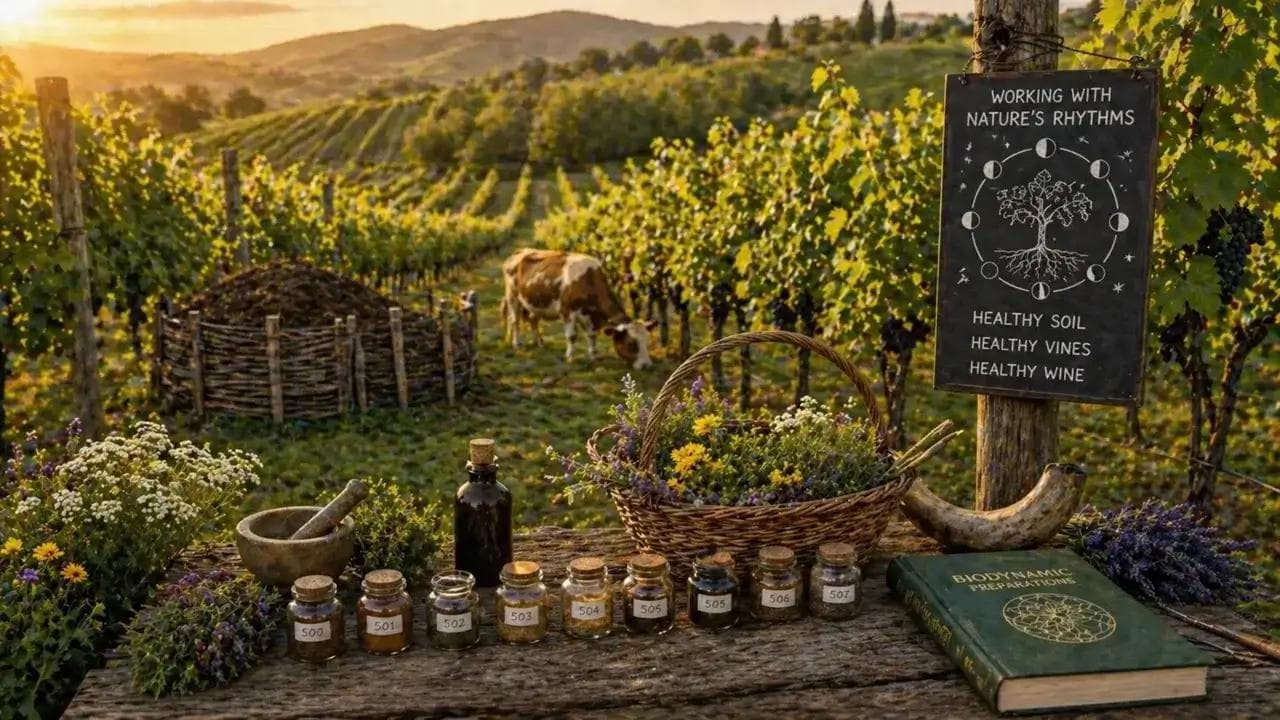
First, nine natural preparations (known as BD 500–508) made from plant and mineral materials are applied to the soil and vines. These are composted or fermented and then applied in tiny doses to stimulate soil life and vine resilience. The most well-known is Preparation 500 cow manure fermented in a cow horn over winter, then stirred into water and sprayed on the soil to boost microbial activity.
Second, farming activities like pruning, spraying, and harvesting are timed according to a biodynamic calendar that follows lunar and seasonal cycles. Many growers find this sharpens their observation of the vineyard rather than just following a fixed schedule.
Third and most importantly, the entire vineyard is managed as one living system. Cover crops, composting, hedgerows, and on-farm biodiversity all work together. Biodynamic farming integrates natural cycles, soil, plants, animals, and the wider environment into one holistic management approach.
The result is a vineyard that is not just maintained; it is actively being improved, season after season.
Does every element have a peer-reviewed explanation behind it? Not yet. But as you will see in the data sections ahead, the outcomes biodynamic vineyards consistently produce are very hard to argue with.
Biodynamic vs. Organic vs. Conventional Viticulture
Understanding where biodynamic wine farming fits requires seeing it alongside the alternatives.
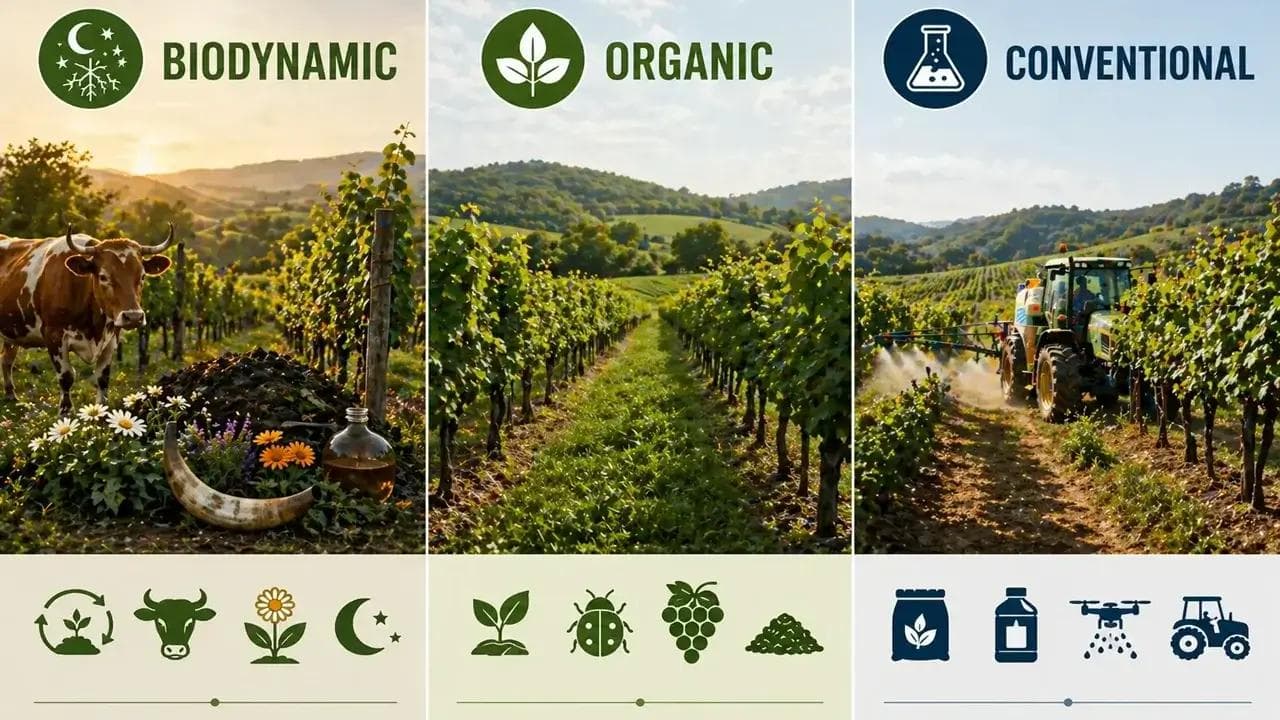
Conventional viticulture uses synthetic fertilizers, herbicides, and pesticides to maximize yields and protect crops. Productive in the short term, but well-documented for degrading soil biology and long-term vine health over time.
Organic viticulture eliminates synthetic chemicals. It relies on composting, covering crops, and natural pest control. A meaningful step forward but still primarily focused on what you remove from the system rather than what you actively build into it.
Biodynamic viticulture includes everything organic farming does and goes further. It adds the nine preparations, biodynamic calendar timing, whole-farm ecosystem integration, mandatory biodiversity conservation, and a regenerative, not just sustainable, vision for the land.
The simplest way to understand the difference: organic farming aims to do no harm. Biodynamic farming aims to actively heal and strengthen the land over time.
That distinction matters enormously for growers thinking about the next 20 years of their vineyard's health.
Common Myths vs. What the Science Actually Says
Biodynamic viticulture attracts strong opinions from both sides. Here is what the evidence actually shows.
Myth 1: It's pure mysticism with no measurable impact
The most common objection and the most incomplete one.
Yes, the lunar calendar and preparations like horn manure lack strong peer-reviewed mechanistic explanations. That is a fair scientific critique. But the outcomes those practices produce are documented and measurable.
At Domaine Les Brosses in Saumur, conversion to Demeter-certified biodynamics between 2017 and 2023 produced striking results: soil organic matter rose from 1.8% to 3.4%, water infiltration improved from under 2mm/hr to 18mm/hr, and earthworm density jumped from fewer than 3 to an average of 27 per shovel-full.
Whether those results come from the preparations themselves, the increased attention biodynamic farmers give their land, or a combination of both, the outcomes are real. The mechanism is debatable. The impact is not great.
Myth 2: Biodynamic grape growing always lowers yield
A legitimate concern, but the evidence is more nuanced than a simple yes or no.
Regenerative organic vineyard blocks delivered average yields of 2.17 tons per acre versus 1.85 tons per acre in conventional blocks, about a 17% increase over a four-year trial period. The data shows that regenerative management can boost yields while enhancing ecosystem health, contrary to the notion that sustainable practices sacrifice productivity.
Yield variability is real during the early transition years. But mature biodynamic vineyards regularly hold yields steady while building the soil capital that makes the vineyard more resilient to climate stress season after season.
Myth 3: Biodynamic wine tastes no different from conventional wine
The evidence here is particularly compelling.
In a blind tasting of 10 pairs of biodynamic and conventionally made wines, conducted by Fortune and judged by seven wine experts, including a Master of Wine and head sommeliers, nine of the biodynamic wines were judged superior and found to have better expressions of terroir, the way a wine represents its specific place of origin in its aroma, flavor, and texture.
Beyond tasting panels, metabolomics research confirms chemical differences at the grape level. Biodynamic samples showed the most significant metabolic differentiation compared to organic and integrated farming, with ethanol, sugars, organic acids, and amino acids emerging as the most practice-dependent metabolites.
Biodynamic grapes are measurably different. And that difference shows up in the glass.
Measurable Outcomes: Real Data from Real Vineyards
Philosophy is one thing. What actually happens on the ground is another thing. Here is what biodynamic vineyards are consistently showing in real-world conditions.
Healthier Soil
This is where biodynamic farming makes its strongest case. Vineyards that switch to biodynamic practices see their soil come alive with more organic matter, more microbial activity, and better soil structure overall.
To put a number on it: soil organic carbon in biodynamic vineyard blocks nearly doubled compared to neighboring conventionally managed blocks in documented 2024 trials. That means the soil is holding more nutrients, breathing better, and supporting vine root systems in a way that conventional farming simply cannot match over time. Over five years, biodynamic methods can boost soil organic matter by up to 30%.
Healthy soil is not just good for the environment. It is the foundation of every great vintage.
Better Water Efficiency
Water stress is one of the biggest challenges facing vineyards today. Biodynamic farming helps here in a very practical way: healthier, more biologically active soil holds moisture better on its own. Biodynamic preparations have been shown to improve water availability through enhanced soil structure, which means less irrigation, lower water costs, and vines that stay resilient even through drier seasons.
For any vineyard manager watching rainfall patterns shift year to year, that is a meaningful operational win.
More Life in the Vineyard
One of the clearest signs of a thriving biodynamic vineyard is what you find when you dig into the soil. Take the Domaine Les Brosses case in France earthworm density grew from fewer than 3 to an average of 27 per shovel-full over six years of biodynamic management. That is not a small change. Earthworms are one of the best natural indicators of soil health, and nine times more of them means the entire underground ecosystem is working.
By 2025, over 200,000 hectares worldwide are managed using biodynamic agriculture, and that number keeps growing as more growers see these results firsthand.
A Growing Market That Rewards the Investment
The consumer side of this is equally encouraging. Demand for biodynamic and organic wine is not a niche trend anymore. The organic wine market was valued at USD 11.37 billion in 2024 and is on track to nearly triple by 2032.
Growers who invest in biodynamic certification today are positioning themselves well ahead of where the market is clearly heading.
Biodynamic Farming Vineyard Pros and Cons
Biodynamic viticulture delivers real results, but it also asks a lot from you. Here is an honest picture.
The Benefits
The biggest win is soil health. Richer organic matter, stronger microbial activity, better water retention, and more resilient vines; these improvements build on each other season after season.
Wine quality follows naturally. When soil biology is thriving, it shows up in the glass. Terroir expression improves, and the research backs up consistently.
Input costs also drop over time. Once the transition stabilizes, no synthetic herbicides, fertilizers, or pesticides means meaningful savings on recurring operational spend.
And the market is moving in your favor. Over 64,000 acres of vineyards are currently certified biodynamic or in conversion globally, representing more than 1,400 wineries, and consumer demand for certified sustainable wine keeps growing.
The Challenges
Biodynamic farming demands more frequent presence in the vineyard, more labor, and more hands-on management, particularly for weed control and disease pressure in wetter climates.
Fungal disease is harder to manage without synthetic fungicides. Copper-based treatments like Bordeaux mixture are the standard alternative, though these come with their own regional regulations to navigate.
Certification takes patience. You need a minimum of three years of farming to the Demeter standard from conventional or one year from organic before certification is granted. That transition window costs money before it earns any label benefit.
Is Biodynamic Viticulture Right for Your Vineyard?
A few honest signals that point toward yes.
If your soil health has declined after years of conventional farming, biodynamic regenerative viticulture is one of the most proven ways to bring it back with measurable improvements typically visible within three to five years.
If water efficiency and climate resilience matter to your operation, healthier biologically active soil will help your vines handle drought and irregular rainfall far better than depleted conventional soil ever could.
If you are already organic, the step to biodynamic certification requires just one year of meeting the Demeter standard, much closer than most growers realize.
And if your brand is built around quality and sustainability, Demeter certification gives you something increasingly valuable: verified, independently audited proof that backs up every claim you make about your vineyard.
The transition takes more time, more observation, and more patience. But the growers who go through it consistently say the same thing: they became better farmers for it.
Conclusion
Biodynamic farming in vineyards is not a miracle, and it is not a myth. It is a rigorous, demanding, and deeply ecological approach to viticulture, one with a growing body of scientific evidence behind it and a track record at some of the world's most respected estates.
The mystical elements are real, and scientists are right to question them. But the measurable outcomes of healthier soil, stronger biodiversity, lower chemical dependency, and more expressive wines are equally real and growing in documentation year after year.
For vineyards serious about long-term health, climate resilience, and producing wines with genuine character, biodynamic viticulture is not a leap of faith. It is an evidence-backed investment in the land that will outlast any single vintage.
The question is not whether it works. The question is whether your vineyard is ready to let it be.
Want to measure what your biodynamic transition is delivering?
Promeraki's IoT sensors give you live soil, moisture, and microclimate data every season, every block.